How to Become a Data Scientist: Career Advice From AT&T, Redis, Chegg
At the 2024 AI Connect K-12 Data Science Conference, practitioners from AT&T, Redis, Chegg, Carters and Hyperplanar shared how they entered data science. They stressed curiosity, problem solving, creativity and flexibility over loyalty to any one tool.
By The AI Enterprise Magazine Team3 min read

Key takeaways
- Curiosity first. Panelists named curiosity and problem solving as the core data science traits.
- Tools change. AT&T's Frances Boykin said her organization moved from Teradata and SAS to Snowflake, Tableau, Power BI and Databricks.
- Learn the problem, not the tool. Carters' Selma Dogic said most people should simply learn SQL and focus on how to approach a problem.
- Excel still matters. Leaders often want results delivered in Excel.
- Stack skills and stay flexible. Peter Chen advised combining skills, and Boykin chose flexibility as her one word of advice.
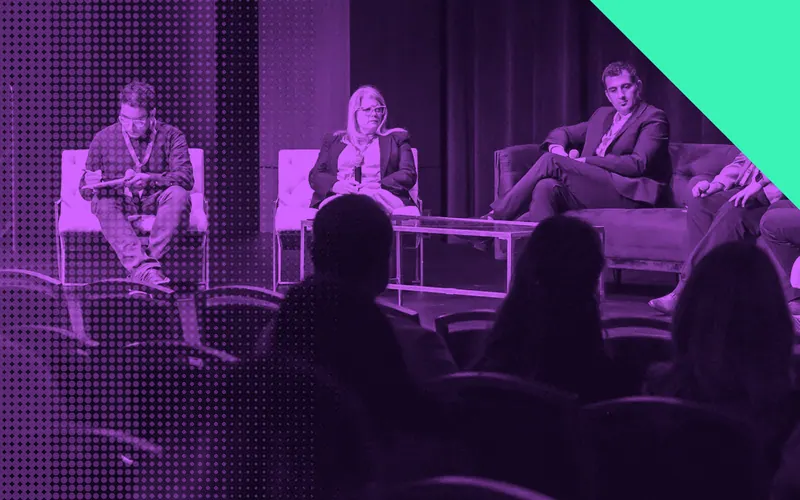
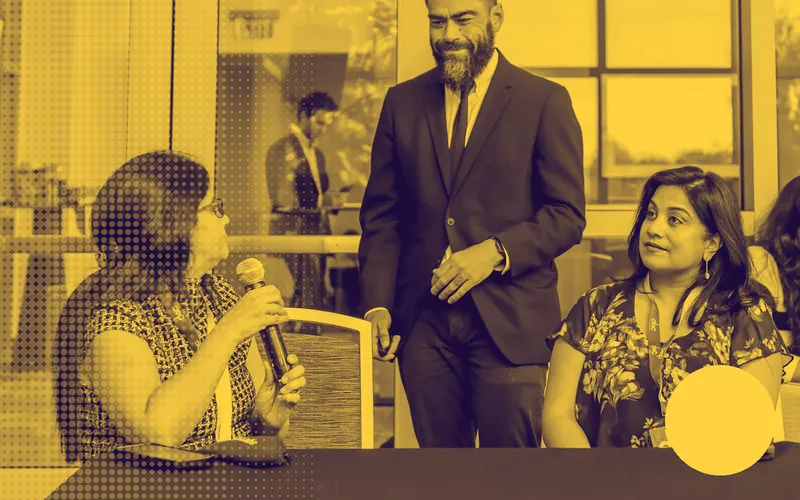
At the 2024 AI Connect K-12 Data Science Conference, a panel of working data professionals explained how students can become data scientists, and what they said matters more than any single programming language. The virtual session was moderated by Ginger Baxter, assistant dean of graduate career advancement at the University of Miami Herbert Business School. Panelists were Dr. Frances Boykin, director of advanced analytics at AT&T; Peter Chen of Hyperplanar; Selma Dogic, who leads the analytics center of excellence at Carters; Anthony Dicecco of Chegg; and Savannah Norem, a developer advocate at Redis. Baxter said nearly 36% of attendees were educators.
What does it take to become a data scientist?
Baxter told students who wanted step-by-step instructions that the answer was not a list of languages. "You need to learn structure, problem solving, curiosity, iterative thinking," she said. Several panelists named curiosity as the defining trait, describing data science as detective work in which you follow the data rather than decide in advance what it will say.
Norem described her own motivation as the thrill of finding something nobody else knew yet, a feeling she first had in undergraduate research. Dogic said her childhood love of mysteries pointed her the same way.
Do you have to love math to work in data?
Not at first, according to the panel. Norem said she was good at math but did not enjoy it until college research showed her why it mattered. Dogic said math was a challenge for much of her schooling until an AP Statistics class in high school became her favorite, and she took statistics again in college. Baxter explained that AP, or advanced placement, lets high school students earn college credit by passing an exam.
Panelists also credited extracurriculars. Boykin took a vocational aptitude test in school that pointed her toward data, and she did Model United Nations. Dicecco pointed to music and running, Baxter to chess, bridge and quiz bowl.
How important is creativity in data science?
Chen said he won a prize for the most creative project at a science fair, one that mapped binary patterns from an ancient Chinese text to musical notes. He argued that creativity will matter more as AI handles routine work. "If you stack different skills then it becomes unique," he said, adding that people who find coding tedious can still succeed by combining data skills with the humanities or arts.
Chen said he uses generative AI to rewrite some of his code and then adds his own modeling code. Dogic said her social studies background helps with strategy work involving leaders across business units.
Which tools and languages should students learn?
The panelists disagreed on Python versus R, and said the debate continues inside their own teams. Norem called herself "Python all the way," Dicecco prefers R, and Boykin said her AT&T team writes Python in Databricks even though she prefers R. Dogic's team at Carters works in the cloud with Amazon SageMaker, Python and Tableau, and she said most people should simply learn SQL.
Her broader point was that fundamentals outlast tools: "Less about the tool and more about the problem," she said. Boykin said AT&T had recently moved away from Teradata and SAS toward Snowflake, Tableau, Power BI and Databricks, so people switch tools many times in a career. Chen described moving from S-PLUS to R and then to Python over his career.
Excel also came up repeatedly. Boykin said leaders at AT&T still want analysis delivered in Excel, so Excel skills remain required. Baxter summed up the mindset as "marry the mission but date the methodology."
What one word would the panel give the next generation?
Asked for a single piece of advice, Boykin chose flexibility, saying data scientists who cannot pivot or go around a problem will be held back. Baxter also urged students to develop resilience and to learn when to ask for help, saying students should try a problem, note what they did, and ask about the specific step where they are stuck.
Where can you keep learning from data and AI leaders?
AI Connect hosts free live webinars where practitioners discuss careers, skills and enterprise AI. The 2027 schedule includes 24 webinars in four series: the AI × Enterprise Panel Series, AI Demo Days, Agentic AI Showcases and the Plug & Play Series. Details are at /webinars/, and registration for 2027 events is coming soon.
Frequently asked questions
What skills do you need to become a data scientist?
Panelists emphasized curiosity, structured problem solving, iterative thinking and resilience, plus working knowledge of SQL, Python or R and Excel.
Should I learn Python or R?
The panel was split. Norem prefers Python, Dicecco prefers R, and several said the right tool depends on the purpose and that tools change over a career.
Do you need to be great at math to work in data science?
Not necessarily at the start. Two panelists said they did not enjoy math until college research or a statistics class showed them its purpose.
Can creative people succeed in data science?
Peter Chen argued creativity will become more valuable as AI automates routine tasks.
This article is based on remarks by Ginger Baxter, Assistant Dean of Graduate Career Advancement, University of Miami Herbert Business School (moderator); Dr. Frances Boykin, Director of Advanced Analytics, AT&T; Peter Chen, Hyperplanar; Selma Dogic, Analytics Center of Excellence lead, Carters; Anthony Dicecco, Chegg; Savannah Norem, Developer Advocate, Redis at AI Connect K-12 Data Science Conference 2024 on July 25, 2024. More coverage: More AI Connect Events.
Filed under: People, Culture & Leadership, AI Use Cases & Applications