Operational Decision Systems: The Next Shift in Enterprise AI
At ALIGN New York City 2026, SAS's Saurabh Mishra argued that the next wave of enterprise AI will move beyond RAG and agents to operational decision systems that remember events, connect them over time and learn from past decisions.
By The AI Enterprise Magazine Team3 min read

Key takeaways
- Anchor on stable constraints. Reliability, performance, governance and cost still decide which AI patterns enterprises adopt.
- RAG and agents aren't enough. Mishra said they handle grounding and action but not memory of events over time.
- Three missing capabilities. Persistent operational context, temporal and relational awareness, and stateful decisioning.
- Observe reasoning, not just tokens. Cognitive observability traces how decisions were made.
- From stateless to stateful. The next wave optimizes for operational intelligence rather than interaction.
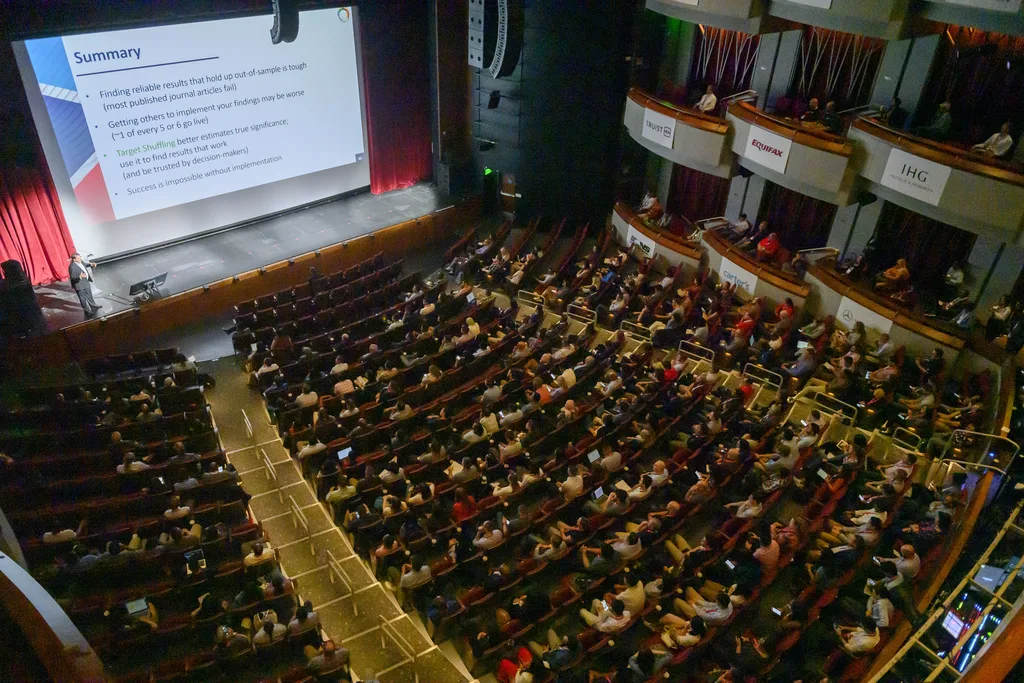
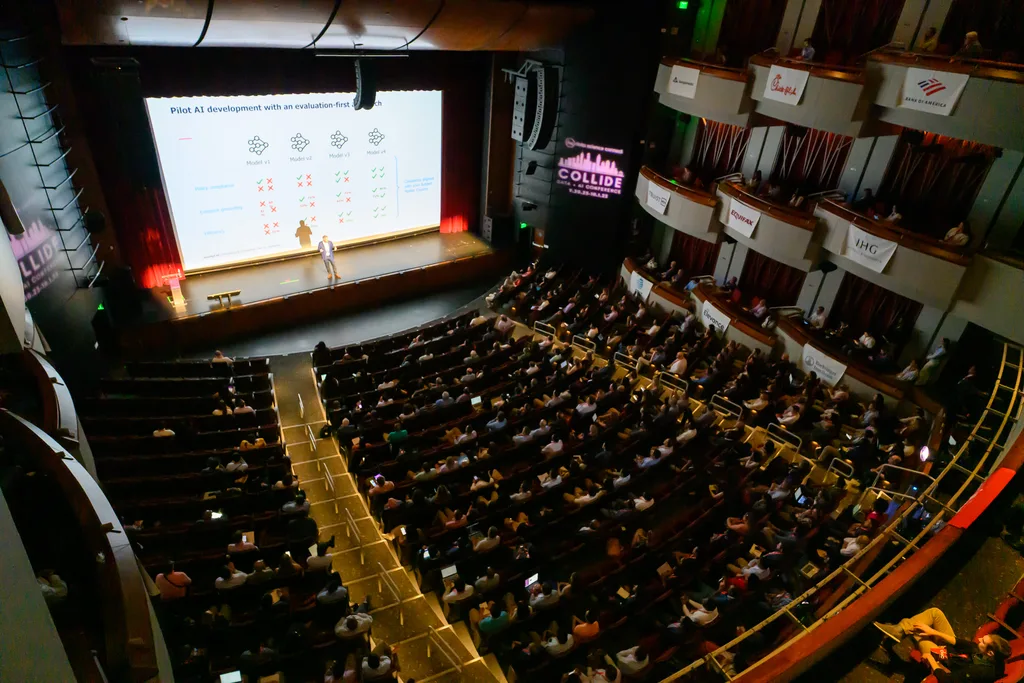
The first wave of enterprise AI optimized for interaction. The next wave, according to Saurabh Mishra, Director of Product Strategy at SAS, will optimize for operational intelligence: systems that remember what happened, connect events and learn from past decisions. Mishra spoke at the ALIGN AI Executive Summit New York City 2026 on June 25, in a session sponsored by SAS titled From AI Experiments to Operational Decision Systems.
What should enterprises optimize for when AI keeps changing?
New models, frameworks and patterns arrive almost weekly, Mishra said, from assistants and copilots to retrieval augmented generation (RAG), MCP, agents, multi-agent systems and reasoning models. Every so often someone declares RAG dead. "It's hard to figure out what's fundamental versus what's convenient," he said.
His answer was to look at constraints that haven't changed. Enterprises still ask whether a system is reliable, whether it performs at the speed of the business, whether it can be governed, and whether the cost is justified. "These are not AI specific questions," Mishra said, but they are now shaping the next architectural shift.
What is an operational decision system?
SAS customers have moved from assistants built for single users to agentic workflows that run tasks end to end, Mishra said. Large enterprises are now asking how AI can span multiple capabilities in business processes that are messy, fragmented and full of context gathered over time. That is the role of what he called operational decision systems.
RAG solved grounding by connecting models to private data and reducing hallucinations, and agents added the ability to act through tools, with MCP as the common protocol. Both remain necessary, he said, but three capabilities are missing:
- Persistent operational context: remembering what events have happened.
- Temporal and relational awareness: connecting those events over time and across hierarchies of people, facilities or assets.
- Stateful decisioning: learning from earlier decisions and outcomes to inform the next one.
How would that work in practice?
Mishra walked through a reliability engineer's problem. A firmware upgrade in February is followed by a bearing change in March, yet vibration and temperature spikes continue, and the next month the same symptoms appear at a second facility.
RAG can answer questions about maintenance procedures and work history, and an agent can analyze telemetry and open a work order. Neither, he said, tells the engineer which events are connected, whether the company has seen this pattern before and what it learned last time. Piecing that together across a chain of events and multiple hierarchies is what SAS calls operational intelligence.
What are the building blocks?
Mishra listed five components and tied each to the four constraints:
- Semantic grounding with RAG and vector stores, which he called largely solved, supports reliability.
- Orchestration, where agents run workflows and call tools, is "where the rubber meets the road" and affects performance and cost.
- Persistent operational context, a memory of events, actions and outcomes, improves reliability and performance because systems don't have to repeat loops to find the same answer.
- Temporal and relational awareness, often built with knowledge graphs and GraphRAG, improves reliability.
- Cognitive observability supports governance. Mishra distinguished it from standard observability such as token counts: it traces how decisions were made, which reasoning steps were involved and what answers were given.
How is enterprise AI changing?
Mishra summarized the shift as moving from interactions to operations, from single sessions to continuity through memory, from answers to decisions, and from stateless to stateful systems. The goal is AI that can participate in business processes, not just answer questions or take isolated actions.
Where to hear more in 2027
Enterprise leaders will keep comparing notes on scaling AI at the 2027 ALIGN AI Executive Summits, invitation-only gatherings in eight U.S. cities: Atlanta, New York City, Dallas, Chicago, San Francisco, Boston, DC and Los Angeles. Registration is coming soon. See the ALIGN AI Executive Summits page.
Frequently asked questions
What is an operational decision system?
An AI system that keeps memory of business events, connects them over time and across hierarchies, and learns from previous decisions to support operations.
Is RAG still needed for enterprise AI?
Yes. Mishra said RAG remains the foundation for grounding answers in trusted knowledge, but it does not provide memory of events or stateful decisions.
What is cognitive observability?
Tracing how an AI system reached a decision, including which reasoning steps were used and what answers were given, rather than only tracking token use or utilization.
This article is based on remarks by Saurabh Mishra, Director of Product Strategy, SAS at ALIGN AI Executive Summit New York City 2026 on June 25, 2026. More coverage: ALIGN AI Executive Summits.
Filed under: Agentic AI, Context, Semantics & RAG, AI Strategy & ROI