
AI Reality Check: Why Shiny Objects Won't Save Your Supply Chain
At ALIGN Chicago 2026, Elder Research's Lisa Targonski explained how AI amplifies weak data and unmonitored systems, and offered a simple readiness check and practical steps for building a foundation that supports ROI.
By The AI Enterprise Magazine Team3 min read

Key takeaways
- AI scales errors too. Bad data and outdated rules get industrialized.
- Watch your agents. Unmonitored AI means abdicating oversight.
- Fix the foundation without stopping. Stabilize data while operations continue.
- Check PAIL. Problem, accessibility, integrity and latency.
- Bring everyone along. A tool nobody trusts or uses has no ROI.
- Maintain what you build. Assign owners to monitor models for drift.
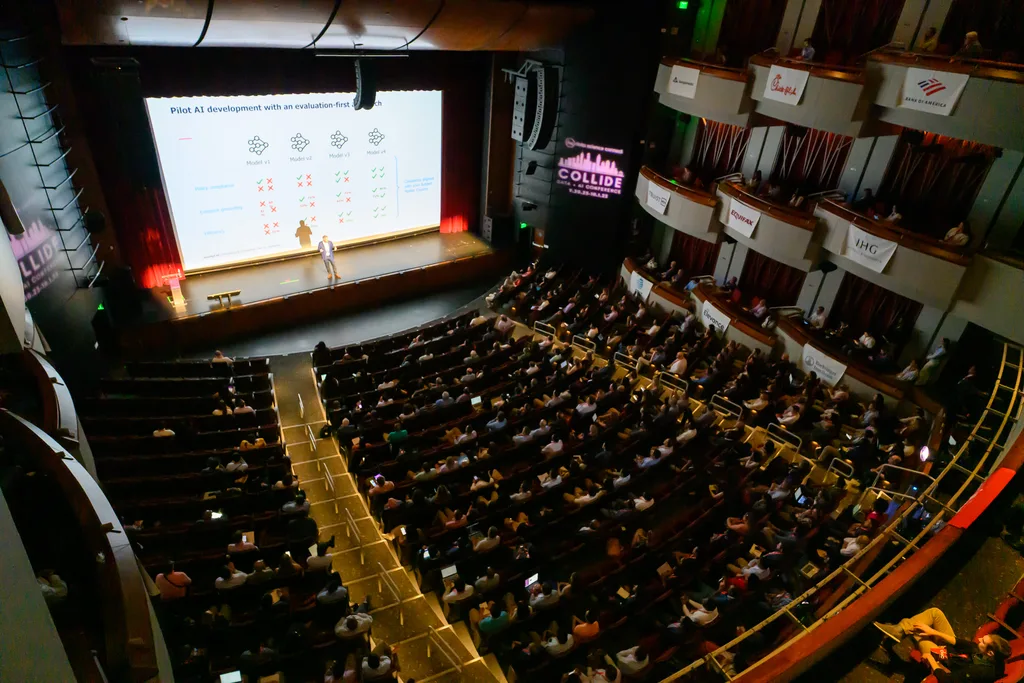
Powerful AI on a weak data foundation doesn't fix problems faster. It makes them faster. That was the message from Lisa Targonski, Director of Commercial Services at Elder Research, at the ALIGN AI Executive Summit Chicago 2026 on July 15, in a session sponsored by Elder Research titled AI Reality Check: Why Shiny Objects Won't Save Your Supply Chain. Targonski has worked with data for more than 25 years across healthcare, hospitality and manufacturing.
What happens when the vision outruns the foundation?
Targonski opened with a Chicago example: the Chicago Spire, planned in the mid-2000s as the tallest building in the Western Hemisphere. A deep foundation hole was dug, then the market crashed and the project stalled. A compelling board presentation, she said, turned into a liability. Vision matters, but so does the work of building the foundation underneath it.
What are the shiny object traps?
Targonski described three, each with a well-known public example:
- The accelerated failure loop. AI can make bad decisions at a scale and speed manual processes never could. She pointed to Zillow's home-buying algorithm, which kept making aggressive offers as the housing market shifted. Zillow shut down that business and laid off about a quarter of its workforce.
- The unmonitored agent. A California Chevrolet dealership's sales chatbot was prompted by a user into agreeing to sell a vehicle for a dollar, and screenshots spread online. Without oversight, she said, you are "abdicating oversight" of AI.
- The unstable foundation. Air Canada's chatbot gave a traveler incorrect information about a bereavement refund policy because it drew from the wrong source. A Canadian tribunal rejected the argument that the bot was responsible and ruled against the airline.
"If you put high-speed AI on top of unstable data or wonky policies or outdated rules, it just industrializes those errors," Targonski said.
Do you have to stop everything to fix the foundation?
No, she said. In the 1850s, Chicago raised many of its buildings several feet using coordinated jacks, while businesses stayed open and people walked in and out. Organizations can stabilize their data foundation the same way, without pausing daily operations. "You can't wait for perfection," she added, but building on an unstable base too soon is also a mistake.
How do you know when you're ready?
Targonski offered PAIL, a reminder to do the unglamorous work that makes the exciting work possible:
- Problem: Is it aligned to strategy, or just a matter of curiosity?
- Accessibility: Can the model reach the data without human or technology bottlenecks?
- Integrity: Is the data accurate for this specific use case?
- Latency: Is the data fresh enough for the question? Weekly data can't answer a question that needs an answer every 15 minutes.
What sets up a positive ROI?
Elder Research uses its See It Solved approach: spot the real issues, execute with the right people at every stage, and bring everyone along. "If you build a tool that nobody will use or trust, your tool is useless," she said.
She described a retailer that relied on rules of thumb to forecast demand across thousands of stores, with products on very different lead times. Elder Research built a deep learning process producing more than a million automated location forecasts, shown with confidence intervals rather than single estimates, plus scenario planning so people could add what they knew, such as a supplier outage.
What builds the bedrock?
Targonski's closing advice:
- Define KPIs so every department means the same thing by terms like "sales."
- Streamline by tracing one data point's journey and removing manual steps.
- Curate a small sandbox for one question, with tiers for clean, mostly clean and raw data.
- Maintain models by assigning people to watch for drift and major shifts.
- Integrate carefully, asking vendors to show how their product fits your systems and business.
Where to hear more in 2027
Data and AI leaders will keep comparing notes on building for ROI at the 2027 ALIGN AI Executive Summits, invitation-only gatherings in eight U.S. cities: Atlanta, New York City, Dallas, Chicago, San Francisco, Boston, DC and Los Angeles. Registration is coming soon. See the ALIGN AI Executive Summits page.
Frequently asked questions
Why do AI projects fail to deliver ROI?
Targonski pointed to unstable data, unmonitored systems and problems that aren't aligned with business strategy.
What is the PAIL readiness check?
Problem, accessibility, integrity and latency: whether the problem matters, the data is reachable, accurate and fresh enough.
Do companies need to pause operations to fix data?
No. Targonski said the foundation can be stabilized while daily operations continue.
This article is based on remarks by Lisa Targonski, Director of Commercial Services, Elder Research at ALIGN AI Executive Summit Chicago 2026 on July 15, 2026. More coverage: ALIGN AI Executive Summits.
Filed under: AI Strategy & ROI, Data & AI Infrastructure, Observability & Data Quality